Business summary
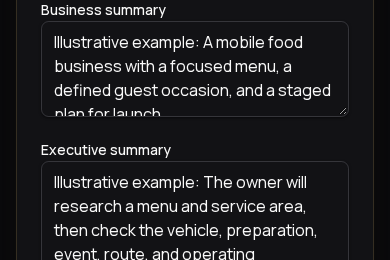
Illustrative example: A mobile food business with a focused menu, a defined guest occasion, and a staged plan for launch.
DA GIFT FOUNDATION · BUSINESS PLANNING
A food truck plan helps connect a menu and service format with the vehicle, location, route, and event decisions needed to operate. Putting purchase, permit, preparation, and next-action questions in one draft makes the launch sequence easier to examine.
The plan and interface below show illustrative sample content. Replace it with details and assumptions that fit your business.
A USEFUL FIRST DRAFT
This template uses the fields in DaGiftFoundation’s current editor. Each starting answer is editable before you save it to your workspace.
Illustrative example: A mobile food business with a focused menu, a defined guest occasion, and a staged plan for launch.
Illustrative example: The owner will research a menu and service area, then check the vehicle, preparation, event, route, and operating requirements that fit the concept. Revenue, schedule, and cost assumptions need owner research.
Illustrative example: Guests at locations or events where the proposed menu and service format may fit their needs.
Illustrative example: An event or location may need a convenient food option that fits its visitors, schedule, and service setting.
Illustrative example: Offer a focused mobile menu and service routine, then evaluate locations and events that fit the concept and operating plan.
Illustrative example: Direct Event Sales, Corporate Catering. These are illustrative service channels, not guaranteed bookings or revenue.
Illustrative example: List vehicle, route, permit, and preparation requirements to research, then outline a small menu and event test.
A PRACTICAL PLANNING GUIDE
A food truck business plan template helps an owner map a mobile food concept to the practical questions that shape its launch. Describe the menu, guest occasion, locations, and service pattern you want to explore. Vehicle purchase or lease, preparation arrangements, permits, routes, event access, storage, staffing, and local requirements need research for the owner’s circumstances. The sample does not verify a route, event booking, supplier, or operating cost. Use the summary and executive summary to explain the idea and distinguish known details from open questions. A food truck startup plan can make dependencies visible before the owner commits to a vehicle, kitchen arrangement, or event schedule.
Customer Problem should name the need an event guest or location has and the context in which the truck could serve it. Solution can describe the menu, service routine, and mobile setup you plan to evaluate. Target Customer narrows the locations and people you want to learn from. Revenue Model can include Direct Event Sales and Corporate Catering as sample channels, but those labels are not confirmed bookings or a revenue forecast. Next Milestones might include researching vehicle needs, permit and route questions, preparing a small menu, and checking event requirements. Turning those items into goals and next actions can help the owner review a launch sequence without treating an illustrative checklist as local compliance advice.
This editable food truck business plan includes a summary, executive summary, target customer, Customer Problem, Solution, Revenue Model, and Next Milestones. After saving, you can add goals, next actions, optional dates or blockers, and choose a review rhythm in the existing workspace. The structure can support a mobile food business plan, food truck startup outline, or event catering plan. It does not supply permits, routes, events, market data, or vehicle recommendations. Replace every sample detail with information verified for your location and operating approach.
Make this food truck plan your own in the editor.
COMMON STARTING QUESTIONS
Describe the menu, target customer, customer problem, solution, revenue model, and next milestone. Research vehicle, preparation, route, event, permit, staffing, and location requirements.
The illustrative plan lists Direct Event Sales and Corporate Catering. It does not imply that any event is booked or that revenue is guaranteed.
Requirements depend on where and how the truck operates. Use the plan to list questions, then confirm applicable requirements with the relevant local authorities or qualified advisers.
You could outline the vehicle, route, preparation, and event questions to research, then prepare a small menu test that fits the concept.