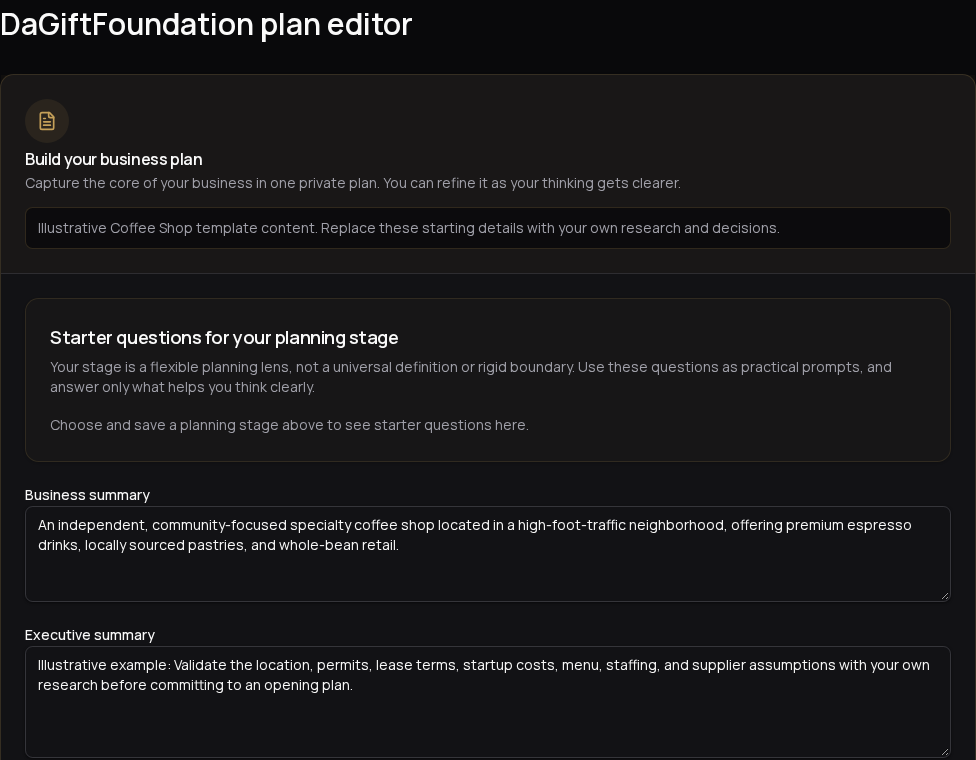
Business summary
An independent, community-focused specialty coffee shop located in a high-foot-traffic neighborhood, offering premium espresso drinks, locally sourced pastries, and whole-bean retail.
DA GIFT FOUNDATION · BUSINESS PLANNING
Don't start from scratch. Use this pre-built, editable workspace to map out your coffee shop’s goals, track your build-out milestones, and secure your funding.
The plan and interface below show illustrative sample content. Replace it with details and assumptions that fit your business.
A USEFUL FIRST DRAFT
This template uses the fields in DaGiftFoundation’s current editor. Each starting answer is editable before you save it to your workspace.
An independent, community-focused specialty coffee shop located in a high-foot-traffic neighborhood, offering premium espresso drinks, locally sourced pastries, and whole-bean retail.
Illustrative example: Validate the location, permits, lease terms, startup costs, menu, staffing, and supplier assumptions with your own research before committing to an opening plan.
Remote workers needing a ‘third space,’ local commuters grabbing morning coffee, and weekend neighborhood residents.
The neighborhood lacks a high-quality, comfortable space with reliable Wi-Fi where people can work, meet, and get premium espresso without the sterile feel of a corporate chain.
A warm, thoughtfully designed cafe with ample seating, fast Wi-Fi, and highly trained baristas serving locally roasted, ethically sourced coffee.
70% Espresso & Beverage POS Sales; 20% Food & Pastry Sales; 10% Retail (Whole beans, branded merch, brewing gear).
Secure commercial lease and submit architectural plans for city permits.
A PRACTICAL PLANNING GUIDE
Opening a successful coffee shop requires more than just great beans. You need a rock-solid coffee shop business plan to secure funding, manage your build-out, and reach profitability before your runway runs out.
This free template is built specifically for cafe owners. It comes pre-filled with the standard revenue models (POS sales, wholesale, merchandise), common customer pain points, and the exact next milestones you need to track (like securing permits and signing your lease). Don't download another static PDF. Click 'Edit this Template' to launch a dynamic workspace where you can assign tasks, invite your partners, and turn your cafe dream into a daily action plan.
A coffee shop plan names the local need a cafe hopes to meet. This example imagines neighbors seeking a comfortable place to work, meet, and enjoy espresso, while nearby options may lack reliable Wi-Fi or a relaxed atmosphere. Treat this as a hypothesis, not customer research. Speak with residents, workers, and commuters, observe cafes, and note comments about seating, hours, accessibility, menus, and prices. Record who you spoke with, what they said in their own words, and what would change your view. Separate direct observations from assumptions so the plan makes clear which ideas need another check before committing time or money.
The proposed solution is a warm cafe with ample seating, fast Wi-Fi, and trained baristas serving locally roasted coffee. These are planning ideas, not confirmed facilities or supplier relationships. Describe the experience you want and the choices needed to deliver it: site layout, equipment, hours, staffing, food handling, and sourcing standards. Compare those plans with local requirements and operating capacity before signing a lease or buying equipment. Guest conversations, a menu test, or a small pop-up could help identify what matters and what should change. Keep the answer editable as you learn; the sample does not confirm a site, a menu, or a supplier.
Possible streams include POS Sales, Wholesale Beans, and Merchandise. The illustrative mix lists 70% Espresso & Beverage POS Sales, 20% Food & Pastry Sales, and 10% Retail (Whole beans, branded merch, brewing gear). These figures are examples, not actual sales or a forecast. Describe what you may sell, how customers could buy it, and which assumptions need validation. Use supplier quotes and your own cost research to estimate ingredients, packaging, payment fees, labor hours, and volume. Show how a change in product mix or average order size would affect the plan, then revise the percentages when you have evidence. The workspace stores your editable assumptions; it does not calculate or verify sales.
The proposed milestone is to secure a commercial lease and submit architectural plans for city permits. It is a planning step, not a completed lease or filing. Break it into local actions: define site requirements, review lease terms with advisers, confirm permits with authorities, and prepare plans with qualified professionals. Add an owner, a due date, and the next decision for each step when those details are known. Other milestones may include supplier selection, equipment procurement, menu tests, staffing, inspections, and an opening checklist. Local requirements vary, so confirm them with the relevant authorities. Replace illustrative details with verified cafe information before relying on the plan.
Make this coffee shop plan your own in the editor.
COMMON STARTING QUESTIONS
Start with a summary, target customer, customer problem, solution, revenue model, and next milestone. Add your own research about the location, menu, suppliers, staffing, and opening requirements as you gather it.
List the questions you need to investigate, such as access, hours, nearby activity, lease terms, and site requirements. Use local observations and qualified advice for your decision; this template does not provide location research.
The sample lists POS Sales, Wholesale Beans, and Merchandise as illustrative possibilities. Edit those entries to reflect the products and services you actually plan to offer.
Possible planning milestones include confirming site requirements, researching permits, choosing suppliers, testing a small menu, and outlining build-out and staffing steps.